Last summer, I found myself sipping lemonade at a Florida resort while a cheerful salesperson pitched me on “vacation freedom.” Though I escaped without signing anything, the encounter sparked my curiosity. How do these arrangements work when they’re not being hawked poolside?
Turns out, over 1,500 U.S. resorts operate under this model, according to ARDA. The numbers surprised me—nearly 10 million American households participate. That’s more people than the population of New York City! But here’s the kicker: modern vacation ownership isn’t just about claiming your week in July anymore.
Through my research, I’ve uncovered how these programs evolved. Remember when timeshares meant swapping keys for fixed dates? Today’s systems use flexible points that let owners book stays like currency. Some even rival hotel loyalty programs in complexity (and paperwork).
The average investment? About $24,000. That’s not chump change, but neither is annual hotel spending for frequent travelers. The real magic lies in the shared ownership structure—you’re essentially buying into a rotating vacation club rather than a static property.
Key Takeaways
- Over 1,500 U.S. resorts offer timeshare arrangements with 252,470 total units
- Modern systems use flexible points instead of fixed weekly schedules
- Average purchase price nears $24,000 according to 2022 data
- Nearly 7.8% of American households participate in vacation ownership
- Programs now compete with major hotel loyalty systems
Introduction: My Journey into Timeshares
My first encounter with vacation ownership began during a desperate search for affordable beach rentals. Google kept suggesting these glossy “property partnerships” that promised luxury stays at Motel 6 prices. Too good to be true? Absolutely—or so I thought.
How I Discovered the World of Vacation Ownership
I initially pictured timeshares as neon-lit traps staffed by sharks in Hawaiian shirts. Then I noticed Marriott and Disney logos on ownership programs. Major brands don’t attach their names to scams—at least not obvious ones.
Our family’s annual $5,000 hotel budget became my wake-up call. Why rent cramped rooms when we could own spacious suites? Modern systems surprised me: no more rigid July weeks. Points-based bookings now rival airline miles for flexibility.
The real shock came when I explored options beyond beach condos. Ski resorts in Aspen? Check. Parisian apartments? Available. Private jets? Apparently yes, though my budget draws the line at shared helicopters.
What sealed the deal? Discovering that 82% of owners actually enjoy their timeshares (ARDA, 2023). Turns out the model works when you skip the pressure-cooker sales pitches and focus on smart vacation planning.
Understanding Vacation Ownership: What is a Timeshare?

My calendar used to rule my life until I cracked the timeshare code. These arrangements let multiple families share property rights—like neighbors splitting a beach house, but with better rules. Modern systems have evolved far beyond grandma’s rigid summer weeks.
Fixed Week vs. Floating Week Explained
Fixed-week ownership works like a recurring calendar event. You get week 26 every year—perfect for anniversary trips or predictable school breaks. But try changing dates? It’s easier to reschedule a root canal.
Floating weeks offer more wiggle room within seasons. Want July 4th fireworks? Better set your alarm—prime weeks vanish faster than free doughnuts at the office. I learned this when trying to book a ski week in February.
| Feature | Fixed Week | Floating Week |
|---|---|---|
| Booking Flexibility | None | Seasonal |
| Availability Guarantee | 100% | First-come basis |
| Best For | Tradition lovers | Spontaneous planners |
| Exchange Options | Limited | Moderate |
Points-Based Ownership Insights
Points systems transformed my vacation strategy. Each year, I get digital currency to “spend” across resorts. A Maui Christmas costs 15,000 points—same as three Orlando hurricane-season weeks. Pro tip: Off-peak travel stretches points further than airline miles.
Modern programs let me bank unused points or borrow from next year. Last summer’s canceled trip? Those points now fund a Parisian spring. It’s like having a vacation time machine—minus the DeLorean.
| Destination | Peak Season | Shoulder Season | Off-Season |
|---|---|---|---|
| Hawaii | 12,000 | 9,000 | 6,500 |
| Orlando | 8,000 | 5,500 | 3,000 |
| Aspen | 14,000 | 10,000 | N/A |
Exploring What is a Key Feature of a Timeshare Estate
The moment I realized I could own a sliver of paradise changed my vacation game forever. Unlike standard rentals, this model transforms travelers into stakeholders with tangible rights. Let me break down why this matters.
Fractional Ownership and Its Perks
Fractional ownership lets you claim actual real estate equity—not just temporary access. Imagine owning 1/12th of a Maui oceanfront villa. You get prime weeks while sharing costs with 11 other families. ARDA reports these programs dominate luxury destinations, offering perks like private chefs and yacht access.
My “aha moment” came when comparing prices. Full ownership of a $3M Aspen condo? Impossible. But 1/10th ownership for $300k? Suddenly feasible. This system democratizes luxury travel while maintaining exclusive amenities.
Deeded vs. Lease Options Uncovered
Deeded arrangements grant permanent rights recorded like traditional real estate. I can sell my stake or pass it down—no corporate approval needed. Leaseholds? They’re glorified long-term rentals. Developers hold the deed, and your access expires like milk.
| Feature | Deeded | Lease |
|---|---|---|
| Ownership Rights | Permanent | Temporary |
| Resale Potential | Full control | Restricted |
| Developer Control | None | Complete |
| Best For | Equity seekers | Short-term users |
During my research, a resort manager shared: “Deeded owners treat properties better—they’re invested literally and emotionally.” That permanence creates accountability missing in lease models.
While lease options cost less upfront, they lack the legacy-building potential of deeded timeshares. My cousin learned this hard truth when her lease expired—right before her dream Hawaii reunion.
Unique Aspects of Timeshare Properties

My jaw dropped when I discovered timeshare properties include floating cruise ship suites and treehouse villas in Costa Rica. Forget cookie-cutter condos—today’s options range from Manhattan penthouses to safari lodges with private butlers. The sheer variety makes standard hotel rooms feel like cardboard boxes.
What truly sets these properties apart? Resort-style perks that turn vacations into VIP experiences. Imagine soaking in infinity pools after skiing Aspen slopes, or having a concierge secure Broadway tickets while your unit gets daily cleaning. No more arguing over who fixes the broken AC—professional management handles everything.
| Feature | Timeshare Properties | Traditional Rentals |
|---|---|---|
| Amenities | Resort-level (pools, spas, clubs) | Basic utilities only |
| Maintenance | 24/7 professional staff | Owner/tenant responsibility |
| Locations | Prime vacation hotspots | Mixed availability |
| Flexibility | Multi-destination networks | Single-property focus |
Disney Vacation Club taught me about exclusive perks—early park access and character meetups you can’t buy day-of. Meanwhile, RCI’s global network lets me trade Colorado ski weeks for Bali beachfront stays. It’s like having a magic wand for vacation planning.
The evolution astonishes me. Modern developments now offer Tesla charging stations, smart home systems, and private chefs—luxuries I’d never afford individually. Yet through shared ownership, I’ve sipped champagne in Parisian suites that make five-star hotels look mundane.
Resort-Like Amenities and My Vacation Property Experiences
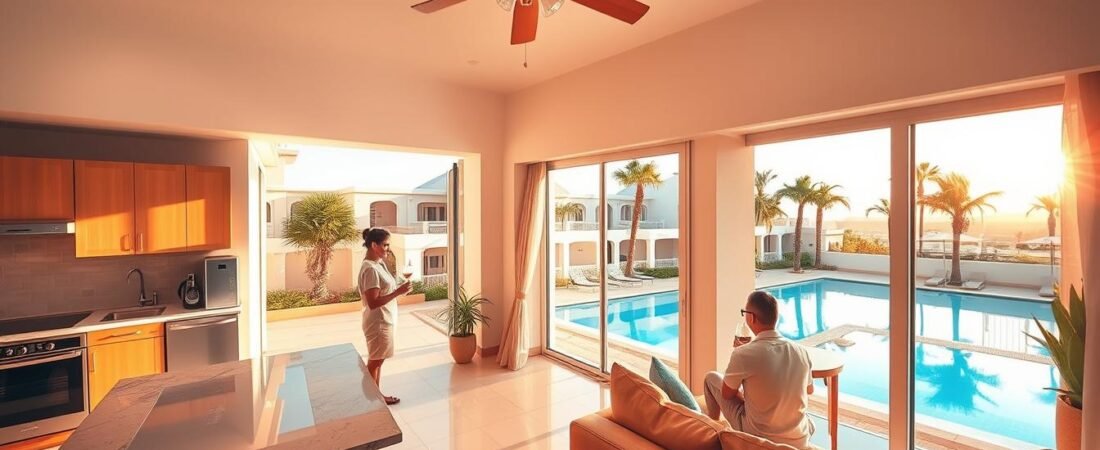
Stepping into my first timeshare property felt like discovering a secret level in a video game—suddenly I had cheat codes for vacationing. The entryway alone dwarfed my New York apartment. A concierge handed me keys to a two-bedroom suite with granite countertops and a balcony overlooking palm trees swaying in sync with the poolside reggae band.
Luxury, Comfort, and Predictability in One Package
I laughed when my teen asked, “Where’s the mini-bar?” Our full kitchen had stainless steel appliances nicer than our home’s. The laundry room became our unpacking hero—no more suitcase Tetris with wrinkled clothes. According to ARDA, these units average 1,200 sq ft—triple standard hotel rooms.
Morning coffee on the private balcony became ritual. Below, families splashed in three pools while retirees dominated the pickleball courts. The resort’s daily activity schedule read like a cruise ship itinerary: mixology classes at 11 AM, s’mores socials at dusk.
What sealed the deal? Consistency. Unlike hotel roulette where “ocean view” might mean peeking between dumpsters, our deeded property delivers the same plush robes and spotless bathrooms every visit. As my spouse joked: “It’s like our vacation home—without the leaky roof repairs.”
The math shocked me. Our kitchen saves $500 weekly on dining—enough for helicopter tours over Maui’s waterfalls. With resort credits covering kayak rentals and spa access, we’ve upgraded from budget travelers to experience collectors.
Diving into Timeshare Contracts and Annual Fees

Signing my first timeshare contract felt like marrying a stranger—exciting until I read the fine print. That 42-page document contained more twists than a Netflix thriller. Pro tip: Treat these agreements like prenups—every clause matters.
Annual fees snuck up on me like subscription services. My $1,200 maintenance bill arrives faster than Christmas decorations in October. Unlike hotel stays, these costs continue whether I vacation or not. A resort manager once quipped: “Ownership means paying for the privilege of paying.”
Three revelations changed my perspective:
- Perpetuity clauses turn contracts into family heirlooms—your grandkids might inherit fees for a 2050 timeshare
- Resale market prices average 50% below retail, according to 2023 industry reports
- Exit fees can exceed $5,000 if you need to terminate early
Contracts vary wildly between developers. Some offer mercy clauses for health crises—others demand payments even if you’re hospitalized. My lawyer friend put it bluntly: “Timeshare contracts aren’t vacation plans. They’re real estate obligations with mai tais.”
| Contract Feature | Flexible Plan | Traditional Plan |
|---|---|---|
| Exit Options | Buyout clauses | Perpetual obligation |
| Fee Increases | Capped at 3% annually | Unlimited |
| Usage Flexibility | Global exchanges | Fixed locations |
Now I review contracts with a magnifying glass and three espresso shots. That $22,000 purchase price? Just the entry fee to a financial marathon where annual costs are the real competitors.
Navigating Ongoing Costs and Hidden Expenses
Crunching numbers on a beach towel became my new vacation ritual. That glossy brochure price? Just the appetizer before the maintenance fee entrée. ARDA data shows these annual charges average $1,000—but grow faster than kids’ shoe sizes.
My rude awakening came when resort bills arrived like uninvited in-laws. Special assessments for pool upgrades? Exchange fees rivaling airline baggage costs? Suddenly that “affordable” ownership felt like a gym membership I couldn’t cancel.
Deeded arrangements add financial twists. Imagine paying mortgage slices for properties you’ll never fully own. My spreadsheet revealed shocking math: Maintenance fees alone could drain $30,000 over decades. That’s a luxury cruise lost to plumbing repairs.
Smart owners build buffer budgets. I now stash cash for surprise roof replacements and hurricane-proof windows. Pro tip: Review contracts like mystery novels—the plot twists hide in fee escalation clauses.
While perks remain tempting, ongoing costs demand respect. My solution? Treat timeshares like vintage cars—enjoy the ride, but budget for constant upkeep.
FAQ
Why do resorts push floating weeks over fixed ones?
Flexibility sells! Resorts love pitching floating weeks because they can shuffle owners like a Vegas blackjack dealer. You get a “window” to book, but prime dates vanish faster than sunscreen in July. Pro tip: Read the fine print on blackout dates.
How do maintenance fees turn into a financial sand trap?
Ah, the “gotcha” of timeshare ownership. Those annual fees creep up like resort parking charges—3% yearly hikes are common. I once paid more in fees than my buddy did for his Airbnb. Always factor in long-term costs before signing that shiny contract.
Is buying on the secondary market smarter than direct from resorts?
Absolutely. The secondary market is like a timeshare thrift store—prices drop 50-80% because desperate owners just want out. My cousin snagged a deeded week in Hawaii for
FAQ
Why do resorts push floating weeks over fixed ones?
Flexibility sells! Resorts love pitching floating weeks because they can shuffle owners like a Vegas blackjack dealer. You get a “window” to book, but prime dates vanish faster than sunscreen in July. Pro tip: Read the fine print on blackout dates.
How do maintenance fees turn into a financial sand trap?
Ah, the “gotcha” of timeshare ownership. Those annual fees creep up like resort parking charges—3% yearly hikes are common. I once paid more in fees than my buddy did for his Airbnb. Always factor in long-term costs before signing that shiny contract.
Is buying on the secondary market smarter than direct from resorts?
Absolutely. The secondary market is like a timeshare thrift store—prices drop 50-80% because desperate owners just want out. My cousin snagged a deeded week in Hawaii for $1,000 instead of $20k. Just watch for transfer fees and liens!
What’s the difference between shared ownership and full deeds?
Shared ownership means you’re splitting the pie with strangers. With a deeded timeshare, you own a slice of real estate (hello, property taxes!). Fractional ownership? That’s fancy talk for “we all share the yacht, but nobody gets to drive it.”
Can I rent my week if I don’t use it?
Sure, but good luck turning a profit. Rental income rarely covers annual fees, and resorts often prioritize their own rental programs. I tried renting my Orlando week once—ended up losing $300. Now I swap it for points and call it a win.
Why do people regret lease options vs deeded contracts?
Lease options expire faster than milk. You’re renting time, not owning property. When my 10-year lease ended, the resort jacked up renewal rates 200%. Deeded contracts at least give equity—even if it’s Monopoly money.
Do points systems actually offer better flexibility?
Points let you play vacation Tetris—swap weeks, upgrade rooms, or book multiple short stays. But resorts change point values like TikTok trends. My Marriott points bought a ski week in 2022… now they’re barely enough for a Tuesday in Tulsa.
,000 instead of k. Just watch for transfer fees and liens!
What’s the difference between shared ownership and full deeds?
Shared ownership means you’re splitting the pie with strangers. With a deeded timeshare, you own a slice of real estate (hello, property taxes!). Fractional ownership? That’s fancy talk for “we all share the yacht, but nobody gets to drive it.”
Can I rent my week if I don’t use it?
Sure, but good luck turning a profit. Rental income rarely covers annual fees, and resorts often prioritize their own rental programs. I tried renting my Orlando week once—ended up losing 0. Now I swap it for points and call it a win.
Why do people regret lease options vs deeded contracts?
Lease options expire faster than milk. You’re renting time, not owning property. When my 10-year lease ended, the resort jacked up renewal rates 200%. Deeded contracts at least give equity—even if it’s Monopoly money.
Do points systems actually offer better flexibility?
Points let you play vacation Tetris—swap weeks, upgrade rooms, or book multiple short stays. But resorts change point values like TikTok trends. My Marriott points bought a ski week in 2022… now they’re barely enough for a Tuesday in Tulsa.