
Picture this: Karen from Ohio won a “free tropical getaway” after attending a timeshare pitch in Las Vegas. Two hours later, she left with sunburned enthusiasm, a signed contract, and a nagging suspicion she’d traded her sanity for a property she’d use one week a year. Sound familiar? You’re not alone – the $21.1 billion timeshare industry thrives on stories like hers.
I’ve seen countless buyers dazzled by glossy brochures of beachfront villas, only to realize later they’ve purchased a permanent vacation headache. With 1,541 U.S. resorts and average buyers spending $23,940 per transaction (according to ARDA), this isn’t just about where you’ll vacation – it’s about how you’ll navigate ownership that outlasts most marriages.
Let’s cut through the sales spiel. We’ll explore why these deals often feel stickier than resort poolside margaritas, unpack hidden fees that grow faster than hotel minibar charges, and reveal what that smiling sales rep really means by “flexible ownership.” Consider this your pre-vacation pep talk – minus the stale pretzels and buyer’s remorse.
Principaux points à retenir
- The timeshare industry is projected to nearly double to $38.9 billion by 2033
- Average purchase costs rival a luxury car down payment at $23,940
- 252,470 U.S. resort units create fierce competition for prime vacation weeks
- Maintenance fees often increase unpredictably over time
- Exit strategies are rarely discussed during initial presentations
What Are Timeshares?
Imagine buying a champagne toast for everyone at a 1960s French ski resort – that’s essentially how vacation ownership began. Developers realized they could sell the same alpine chalet 52 times by dividing annual access into weekly slots. Today’s version? A $10.5 billion machine convincing Americans they need permanent dibs on beach chairs.
Defining the Concept and Its Origins
The original pitch made sense: split property costs among multiple families. But what started as friends co-owning a Swiss chalet morphed into corporate contracts thicker than resort towels. Modern versions lock you into decades of payments for the “privilege” of fighting 9.9 million others for prime summer weeks.
A Brief Overview of the Industry
With 1,541 U.S. resorts and counting, this isn’t your aunt’s timeshare. The game changed when companies realized they could sell the same real estate repeatedly while charging annual fees that rise faster than sunscreen prices. Check the numbers:
| Année | Key Industry Move | Résultat |
|---|---|---|
| 1969 | First U.S. timeshare sold | Hawaiian resort divided into 51 intervals |
| 2022 | Points systems introduced | Flexible bookings (with flexible fees) |
| 2023 | Resale market explosion | Owners desperate to offload contracts |
Here’s the rub: When you “buy” a timeshare property, you’re not purchasing land. You’re acquiring a timeshare company’s pinky promise that your designated week won’t double-book – and a lifetime subscription to maintenance fees that average $1,200/year. Cheers to that?
how do timeshares work

Ever tried returning a timeshare? It’s easier to cancel a gym membership in January. These agreements lock you into vacationing at the same spot annually—sometimes for life. That glossy contract isn’t real estate ownership; it’s more like renting a hotel room you’re financially wedded to forever.
Understanding Ownership Contracts
Your signature here is stickier than sunscreen on poolside concrete. Most deals bind you for 25-99 years, with annual fees that climb faster than resort elevator queues. You’re not buying land—you’re purchasing a sliver of time in a property sliced into 52 weekly portions.
Three brutal truths:
- Maintenance fees average $1,200/year and always increase
- Contracts often survive divorce decrees and bankruptcy filings
- Resale values typically plummet 50%+ within five years
How Usage Rights and Time Allocation Operate
Getting your preferred week requires Olympic-level planning. Prime summer slots at beach properties have more competition than a Black Friday sale. Points systems? They’re like arcade tickets—redeemable only if you book 11 months early and avoid holidays.
Pro tip: That “flexible” calendar usually means you flex around the resort’s availability. Want to swap weeks? Prepare for exchange fees that’d make a Vegas concierge blush.
The Different Types of Timeshare Ownership
Ownership models in timeshares are like resort buffet options – they all look tempting until you’re stuck with the bill. Let’s unpack three main flavors: shared-deeded, right-to-use, and points-based systems. Each comes with unique financial indigestion.
Shared-Deeded Ownership Explained
This model hands you a property deed – along with 51 strangers. You’re all legally married to the same vacation unit. Expect shared property taxes and maintenance fees that multiply faster than resort lounge chairs at sunrise. Here’s the kicker:
- Your “week 27” slot is non-negotiable – hurricane season included
- Reselling requires unanimous approval from co-owners
- Inheritance means your kids get your timeshare drama
Right-to-Use and Leasehold Models
These 99-year leases let you pretend you own something. You’re essentially renting a timeshare unit’s shadow. When the contract expires? Poof – your vacation rights vanish like sunscreen at noon. Key limitations:
- No equity buildup – you’re funding the resort’s renovations
- Annual fees increase 3-5% yearly (minimum)
- Transfer restrictions make exit strategies mythical creatures
Modern Points-Based Systems
Points systems promise flexibility but deliver frustration. That mountain cabin stay costs 15,000 points – the beach villa? 45,000. You’ll need better math skills than a blackjack dealer to navigate redemption charts. Common pitfalls:
- Point values change annually (always in the resort’s favor)
- Prime locations book 11 months in advance
- Expiration dates turn unused points into monopoly money
Whether you’re splitting deeds or chasing points, one truth remains: You’re buying responsibility, not real estate. The only thing guaranteed? That annual fee reminder arriving faster than room service.
Exploring Fixed Week and Floating Week Options
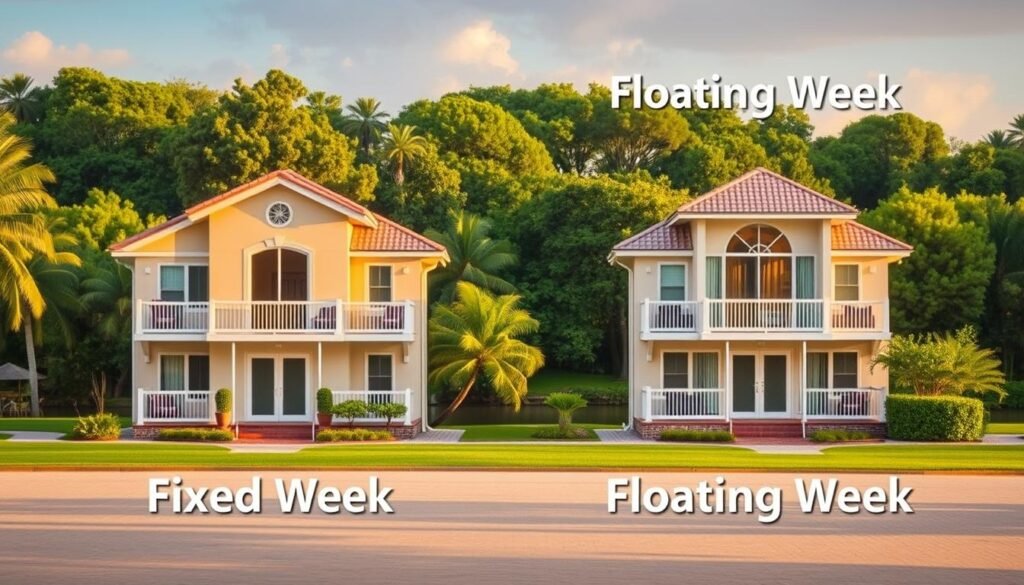
Choosing between fixed and floating weeks is like picking between a straitjacket and a maze. Both promise vacation freedom but deliver scheduling nightmares. Let’s dissect why these systems leave owners more frustrated than a tourist without sunscreen.
Fixed Week Arrangements and Their Limitations
Locked into the same specific week annually? Enjoy that mid-September beach trip during hurricane season. Changing dates often requires:
- Paying upgrade fees that rival a luxury hotel stay
- Finding another owner willing to swap their prime summer slot
- Praying the resort has availability (spoiler: they won’t)
One client inherited week 51 from their parents – December 18-25 at a ski resort. Now they pay $1,400/year for the privilege of shoveling snow on vacation.
Floating Week Flexibility and Reservation Challenges
The “flexible” option turns booking into a Hunger Games scenario. Resorts release prime vacation weeks exactly 364 days in advance. Miss the 9:01 AM booking window? Congratulations – you’ve won a February week in Cancún.
Three brutal realities:
- 80% of owners want July/August weeks (only 30% get them)
- Exchange fees add $300+ to switch locations
- Blackout dates apply to 25% of the calendar
As one exasperated owner told me: “I haven’t used my floating week in three years. By the time I call, it’s either -swim-up rooms in Antarctica or pay $599 to ‘bank’ my points.”
Understanding Timeshare Costs and Hidden Fees
That $23,000 price tag? Consider it the resort’s opening act – the real show begins when the financial encores start rolling in. I’ve watched clients’ eyes widen as their “affordable” purchase morphs into a money pit with more add-ons than a Vegas show ticket.
Upfront Purchase Price and Financing Options
The average $23,160 buy-in is just your first lap around the fee pool. Finance it? Enjoy credit card-level interest rates (11-12%) that’ll have you paying for two vacations – yours and the bank’s. Cash buyers aren’t safe either. As one client groaned: “I thought I overpaid – then the maintenance bills arrived.”
Special Assessments and Additional Expenses
Your $1,480 annual maintenance fees are merely the base camp. Resorts now warn of 10%+ hikes from “operational costs” – code for we’re renovating the lobby bar again. But wait! There’s more:
- Property taxes: Because you technically “own” airspace
- Exchange fees: $300+ to swap your blizzard week for sunshine
- Special assessments: Surprise invoices for hurricane repairs
One couple’s $19k purchase ballooned to $61k over a decade. As the husband deadpanned: “Our contract lasts longer than our marriage – and costs more than our divorce.” Smart money? Treat timeshare math like tequila shots – assume you’ll pay double what’s advertised.
Decoding Annual Maintenance Fees
Maintenance fees are the timeshare gift that keeps on taking – like a souvenir snow globe that demands yearly tribute. That $1,480 average charge isn’t just for pool towels and lightbulbs. Let’s crack open this piñata of perpetual payments.
What Exactly Are You Paying For?
Your cash funds three things: landscaping you’ll never see, repairs for units you don’t own, and insurance hikes from storms you avoided. Resorts call it “shared responsibility” – I call it subsidizing someone else’s margarita machine upgrades.
One client’s bill included a $127 “tiki torch replenishment fee.” Another paid $89/month for “beach erosion mitigation” at a property 300 miles inland. These annual maintenance fees morph faster than a timeshare sales pitch.
How Maintenance Fees Tend to Escalate
Brace for 10%+ yearly increases – resorts blame everything from coconut prices to hurricane names. Your contract’s fine print likely includes “special assessments” that hit like financial Russian roulette. I’ve seen fees double in five years while units aged like milk.
Here’s the kicker: You’re locked into paying every year, even if you skip vacations. That mountain view studio you never use? It still needs new drapes – and you’re buying them. Consider maintenance costs the admission price to a club where the music never stops… and neither do the bills.
FAQ
Why do maintenance fees feel like a subscription I never signed up for?
Great question! Those annual maintenance fees cover property taxes, repairs, and resort amenities—like a surprise membership that auto-renews yearly. Think of it as paying for the privilege of *not* fixing a leaky roof yourself. Just don’t expect the cost to stay flat—they often creep up faster than my caffeine addiction.
Is owning a timeshare really like owning real estate?
Ha! Not quite. You’re buying *usage rights* to a vacation property, not the deed (unless you’re in a shared-deeded model). It’s more like leasing a slice of paradise with strings attached—like yearly fees and scheduling wars. True real estate investors? They’re laughing from their mortgage-free beach houses.
What’s the deal with “floating week” vs. “fixed week” chaos?
Fixed week means you’re locked into the same vacation week every year—great if you love predictability (or July 4th fireworks). Floating week? You’re gambling on availability, like trying to book a concert ticket when everyone else has the same idea. Spoiler: Peak seasons sell out faster than free Wi-Fi at an airport.
Can I just… ignore special assessment fees?
Only if you enjoy legal drama. Those surprise charges fund major repairs or upgrades—like the resort deciding to add a pool shaped like a unicorn. Skip paying, and the timeshare company might come knocking louder than your neighbor’s garage band at 2 AM.
Why do points-based systems give me spreadsheet vibes?
Because they’re basically vacation currency! You trade points for stays, upgrades, or even other resorts. It’s flexible… until you realize you need 10,000 points for a weekend in Maui and your cat sitter just quit. Budgeting required—and maybe a finance degree.
Is reselling a timeshare harder than canceling a gym membership?
Oh, sweet summer child. The secondary market is flooded, and buyers are scarcer than honest infomercials. Many owners end up *paying* to offload their contracts. Pro tip: If a resale offer sounds too good, it’s probably a timeshare exit scam in disguise.
Do right-to-use contracts expire faster than milk?
Depends on the lease! Some last 10-30 years, others vanish quicker than my motivation to fold laundry. Once it’s up? Poof—your ownership rights disappear, and you’re back to begging friends for their Airbnb discount codes.