
Picture this: You’re sipping coffee, flipping through vacation photos, when it hits you. That “investment in lifelong memories” now feels more like a financial anchor. You’re not alone. Last year, my neighbor Linda discovered her Maui timeshare’s maintenance fees had quietly doubled—right as her retirement budget tightened. Sound familiar?
Here’s the reality check: 85% of timeshare owners share that sinking feeling. Unlike traditional real estate, these vacation slices come with quirks that’ll make your head spin faster than a timeshare sales pitch. ARDA’s 2022 survey shows 90% satisfaction among owners, but let’s face it—not everyone wants eternal beachfront commitments.
What most folks don’t realize? Even points-based contracts often involve actual deeds. And guess what? Many realtors would rather wrestle a timeshare shark than navigate this niche market. That’s where specialized brokers become your life raft.
Conclusiones clave
- Timeshare resales require different expertise than traditional real estate
- Market value often falls below original purchase price
- Licensed professionals help avoid common scams
- Contract terms dramatically impact selling options
- Specialized brokerages outperform general realtors
I’ll be straight with you—this isn’t about striking gold. It’s about cutting losses wisely. From decoding your contract’s fine print to spotting red flags in buyer offers, we’re diving deep into strategies that protect both your wallet and sanity. Let’s turn that vacation albatross into someone else’s sunset margarita fund.
Understanding Your Timeshare Contract
Let’s play detective with your vacation paperwork—Sherlock Holmes style. That binder collecting dust? It holds clues about whether you’re sitting on a golden ticket or a timeshare-shaped pumpkin. Ownership structures vary more than resort buffet options, and your exit strategy depends entirely on what’s in that contract.
Reviewing Ownership Documentation
Grab a magnifying glass. Your first mission: determine if you own real property or just vacation bragging rights. Deeded contracts mean you technically own a slice of the resort—like a fractional title. Right-to-use agreements? Those expire faster than sunscreen on a tropical beach.
- Fixed weeks: Same dates annually (even if hurricanes prefer your week)
- Floating periods: Book within a season—if availability exists
- Points systems: Like casino chips, but for vacation days
Clarifying Access Arrangements and Points
Did your resort developer sweet-talk you into “upgrading” to points years ago? That change matters. Points-based systems create resale hurdles—buyers inherit complex booking rules. Pro tip: Original contracts often hold more value than modified versions.
Dig up every amendment. Missing paperwork turns selling into a game of telephone with the HOA board. Remember: Clear documentation prevents buyers from ghosting faster than a timeshare sales rep at renewal time.
Preparing to Sell Your Timeshare
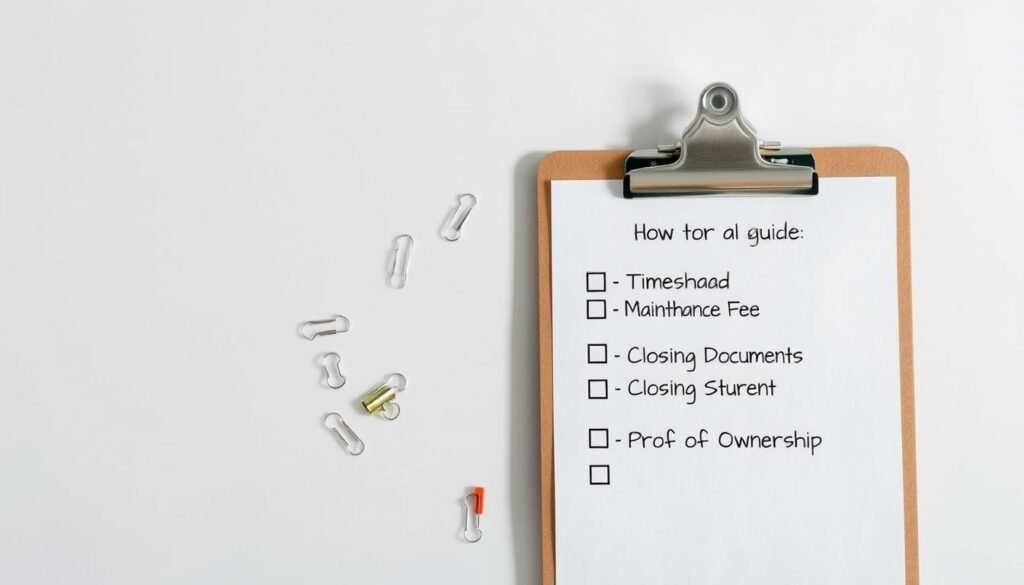
Paperwork might not spark joy, but it’s your golden ticket out of vacation ownership purgatory. Think of your documents as puzzle pieces—missing one, and the whole picture falls apart.
Gathering Essential Documents and Details
Start your treasure hunt with these non-negotiables: original purchase agreements (dusty but crucial), deeds or membership certificates, and financing records showing zero balances. Current maintenance fee statements prove you’re not hiding financial skeletons—buyers will check these first.
Resort specifics matter more than you’d think. Jot down:
- Exact location (country matters for tax implications)
- Bed/bath count (nobody wants “cozy” surprises)
- Amenities list (poolside margarita machines count)
Checking Up on Maintenance Fees and Payments
Those sneaky HOA fees? Paid. Random “resort improvement” charges? Settled. Everything must show a $0 balance. I’ve seen deals crumble over a $200 overdue payment—it’s like forgetting to zip your pants before a job interview.
Exchange program paperwork (RCI, Interval International) can sweeten the deal. Buyers love flexibility—it’s the difference between “meh” and “take my money!” Pro tip: Bundle documents digitally. When offers roll in, you’ll thank past-you for the organization.
How to Sell a Timeshare
Let’s cut through the tropical drink umbrellas and talk brass tacks. Your vacation slice isn’t aging like fine wine—it’s depreciating faster than a Lamborghini leaving the dealership. The harsh truth? Most owners consider breaking even a miracle.
Setting Realistic Price Expectations
Forget original purchase prices. The resale market operates on different math—think garage sale economics. I recently saw a Maui week listed for $1 on eBay. That’s your competition.
Here’s your survival kit:
- Search sold listings (not asking prices) on RedWeek and TUG
- Compare units with identical seasons and amenities
- Factor in $2,000-$5,000 closing costs buyers might demand
Exploring Listing Options versus Developer Buy-Back
Some resorts now offer mercy programs. Disney’s ROFR (Right of First Refusal) occasionally buys back contracts. Marriott’s internal marketplace helps owners bypass the wild west of public listings.
But here’s the kicker: Many developer “buy-back” offers involve surrendering your deed without compensation. Is that better than decades of fees? Grab a calculator—sometimes freedom’s the real payout.
Pro tip: Resale platforms charge upfront fees. Vet them through ARDA-ROC. If they promise moon prices? Run faster than a timeshare presentation escapee.
Choosing the Right Timeshare Resale Company
Navigating the resale market feels like playing three-card monte with your vacation budget. Specialized licensed real estate professionals become your human shield against industry sharks. Their expertise in title transfers and state regulations separates true pros from polished scammers.
Evaluating Agency Credentials and Licensing
Ask this first: “Show me your state real estate license.” Legit companies display credentials like badges of honor. ARDA recognition matters—their seal approves firms understanding resort-specific laws. No accreditation? That’s your cue to exit stage left.
Fee structures reveal character. Reputable resale company agents explain costs upfront—no “surprise” charges later. One client avoided $3,500 in hidden fees by demanding full disclosure before signing.
Reviewing BBB and ARDA Ratings
The Better Business Bureau website is your truth serum. Search complaints and response rates. Top-rated companies resolve issues faster than resorts restock mini-bars.
Cross-reference with ARDA’s member directory. Approved firms follow ethical guidelines stricter than HOA pool rules. Remember: Cold calls promising “guaranteed buyers” belong in the same category as free vacation offers—fantasyland.
Your homework:
- Verify FTC registration numbers
- Search “[Company Name] + lawsuit”
- Request client references from 2023
Avoiding Timeshare Scams and Pitfalls
Ever get a call promising quick cash for your vacation slice? That’s the sound of scam artists circling. These operators target owners like heat-seeking missiles—and their tactics evolve faster than resort dress codes.
Identifying Red Flags in Sales Offers
Legitimate companies don’t play hide-and-seek with credentials. If a caller claims they’ve got a buyer offer but needs your credit card first? Hang up faster than a timeshare presentation escape artist.
- Unsolicited “buyers” offering magical solutions
- Requests for upfront money (escrow, taxes, fees)
- Pressure to wire funds immediately
Steps for Effective Due Diligence
Treat every offer like a suspicious sunscreen bottle—inspect thoroughly. I once helped a client uncover three fake companies just by checking ARDA-ROC’s member directory.
- Verify licenses through state regulatory boards
- Search BBB complaints dating back 5 years
- Demand written contracts—no verbal promises
Remember: Trust is earned, not dialed-in randomly. Real professionals welcome scrutiny like beachgoers welcome shade. If they rush you? Their next vacation might be funded by your money.
Leveraging Real Estate Agents and Broker Services
Think of timeshare resales as a legal jungle—licensed agents are your machete-wielding guides. This specialized corner of real estate demands more than generic expertise. Seasoned professionals fluent in resort contracts and state laws become your secret weapon.
Benefits of Working with Licensed Professionals
Licensed real estate agents specializing in vacation properties know the terrain. They decode ROFR clauses faster than you can say “right of first refusal.” Unlike general estate agents, these pros handle title transfers and resort approvals daily.
Top-tier brokerages often work commission-only—no upfront fees. One client saved $12k in maintenance fees by timing their sale perfectly through agent insights. Their buyer networks stretch further than all-inclusive resort buffets.
Practical Negotiation Strategies
Skilled real estate agents turn lowball offers into viable deals. I’ve seen them creatively bundle unused points to sweeten packages. They also anticipate resort buy-back attempts that could derail your sale.
Pro tip: Let agents handle the “why’s your unit better” conversations. Their comparison charts make buyers feel like they’re scoring Black Friday deals—even at market value.
Remember: In this niche market, a licensed real estate pro isn’t just helpful—they’re your exit strategy’s GPS. Without one, you’re just hoping someone finds your paperwork buried treasure.
FAQ
Why is my timeshare contract trying to outwit me?
Contracts love playing hide-and-seek with sneaky clauses. I always dig through ownership docs to spot exit fees, transfer rules, or “surprise” renewal terms. Trust me—you don’t want to gift the developer your firstborn by accident.
Can I skip paying maintenance fees while selling?
Nope. Maintenance fees are like that clingy ex—they’ll chase you. Buyers check if you’re up-to-date, and delinquencies tank your resale value. I pay mine religiously to avoid drama. Think of it as keeping your timeshare’s Instagram profile *curated*.
Should I list my timeshare or beg the developer to take it back?
Developers buy back units like they’re doing you a *favor*—often lowballing. I list mine on reputable resale platforms instead. Sure, it’s slower, but you’ll pocket more than a sympathy coupon for the resort gift shop.
How do I avoid getting scammed by resale companies?
If a company demands upfront cash or promises a “guaranteed sale,” I sprint. Legit brokers charge commissions *after* closing. I also check BBB ratings and ARDA affiliations. Scammers hate paper trails—so I leave breadcrumbs.
Do real estate agents actually help sell timeshares?
Licensed agents know the resale market’s secret handshakes. They’ll price your unit realistically and negotiate like it’s *Succession* season finale. I’d skip the DIY route unless you enjoy arguing with strangers about “points value.”
What’s the fastest way to lose money selling a timeshare?
Panicking. Desperate sellers accept lowball offers or hire sketchy exit firms. I set realistic prices, vet buyers, and treat due diligence like a prenup. Patience isn’t fun, but neither is funding a scammer’s yacht party.
Can I trade my timeshare for a private island?
Only in your dreams. Exchange programs might swap your week for a different resort, but they won’t upgrade you to *Lifestyles of the Rich and Famous*. I focus on resale value—not tropical fantasies.